Buy mlm1.eu ?
We are moving the project
mlm1.eu .
Are you interested in purchasing the domain
mlm1.eu ?
domain@kv-gmbh.de · 0541-91531010
Buy mlm1.eu ?
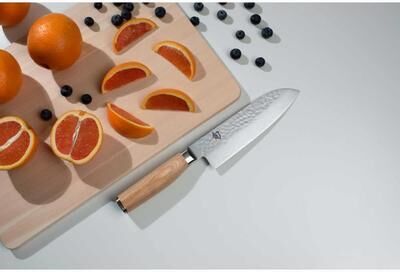
Which is better, a Santoku knife or a chef's knife?
The choice between a Santoku knife and a chef's knife ultimately depends on personal preference and the specific tasks you will be using the knife for. Santoku knives are known for their versatility and are great for slicing, dicing, and mincing, making them a popular choice for everyday cooking. On the other hand, chef's knives are more all-purpose and can handle a wider range of tasks, including chopping, slicing, and even some light cleaver work. If you are looking for a knife that can handle a variety of tasks, a chef's knife may be the better option. However, if you prioritize precision and control in your cutting, a Santoku knife may be the better choice. **
Which Santoku?
When choosing a Santoku knife, it is important to consider the blade material, handle design, and overall comfort and balance of the knife. High-quality Santoku knives are typically made of high-carbon stainless steel for durability and sharpness. Look for a knife with a comfortable handle that provides a secure grip to prevent slipping during use. Ultimately, the best Santoku knife for you will depend on your personal preferences and cooking style. **


Similar search terms for Shun-Kazahana-Santoku-Knife
Top-Angebote
Products related to Shun-Kazahana-Santoku-Knife:
-
"Shun Kazahana Utility Knife, 6"""This utility knife from the Shun Kazahana collection combines features of both a paring knife and a chef's knife. The narrow, straight blade and sharp tip allow this knife to handle detail work, along with slicing and chopping.99,95 $*Shipping: 0,00 $Secure redirect to the provider
-
"Shun Kazahana Chef's Knife, 8"""This chef's knife from the Shun Kazahana collection can handle nearly every food prep task with ease. Use it for routine cutting tasks like chopping, slicing, and dicing. The rounded belly allows for rocking cuts to mince herbs and garlic.139,95 $*Shipping: 0,00 $Secure redirect to the provider



-
What is a Santoku used for?
A Santoku knife is a versatile Japanese knife that is used for a variety of kitchen tasks. Its name translates to "three virtues" or "three uses," referring to its ability to handle slicing, dicing, and mincing. The Santoku is designed for precision cutting, making it ideal for preparing vegetables, fruits, and boneless meats. Its wide blade and sharp edge make it well-suited for both chopping and slicing, making it a popular choice for home cooks and professional chefs alike. **
-
Does every knife fit into a knife block?
No, not every knife will fit into a knife block. Knife blocks are designed to hold specific types and sizes of knives, and not all knives will be compatible with every block. It's important to check the dimensions and design of the knife block to ensure that it will accommodate the knives you have. Additionally, some knife blocks are designed with slots of different sizes to accommodate a variety of knives, while others may only fit a specific set of knives. **
-
Is this a prop knife or a real knife?
This is a prop knife. It is designed to look like a real knife but is made of safe materials such as plastic or rubber to prevent any harm during use. Prop knives are commonly used in theatrical performances, film productions, and cosplay events to create a realistic visual effect without the risk of injury. **
-
Is this a decorative knife or a real knife?
This is a decorative knife. It is not a real knife meant for practical use. The intricate design and ornate details suggest that it is intended for display or decorative purposes rather than functional use. It is important to handle it with care and treat it as a decorative item rather than a tool. **


Why is the Japanese knife called a Japanese knife?
The term "Japanese knife" refers to a style of knife that originates from Japan and is known for its exceptional craftsmanship, sharpness, and precision. These knives are often made using traditional Japanese techniques and materials, such as high-carbon steel and layered Damascus steel. They also feature unique blade shapes and designs that are distinct to Japanese cutlery. The term "Japanese knife" is used to differentiate these knives from other styles of knives, such as Western-style knives, and to highlight their cultural and historical significance. **
How do you sharpen a knife with another knife?
To sharpen a knife with another knife, you can use a technique called honing. Hold the sharpening knife at a 20-degree angle against the blade of the dull knife. Then, with light pressure, slide the sharpening knife along the blade from the base to the tip in a smooth, consistent motion. Repeat this process on both sides of the blade until the knife is sharp. Be sure to use caution and keep your fingers away from the blade to avoid injury. **
Top-Angebote
Products related to Shun-Kazahana-Santoku-Knife:
-
"Shun Kazahana Utility Knife, 6"""This utility knife from the Shun Kazahana collection combines features of both a paring knife and a chef's knife. The narrow, straight blade and sharp tip allow this knife to handle detail work, along with slicing and chopping.99,95 $*Shipping: 0,00 $Secure redirect to the provider
-
Which is better, a Santoku knife or a chef's knife?
The choice between a Santoku knife and a chef's knife ultimately depends on personal preference and the specific tasks you will be using the knife for. Santoku knives are known for their versatility and are great for slicing, dicing, and mincing, making them a popular choice for everyday cooking. On the other hand, chef's knives are more all-purpose and can handle a wider range of tasks, including chopping, slicing, and even some light cleaver work. If you are looking for a knife that can handle a variety of tasks, a chef's knife may be the better option. However, if you prioritize precision and control in your cutting, a Santoku knife may be the better choice. **
-
Which Santoku?
When choosing a Santoku knife, it is important to consider the blade material, handle design, and overall comfort and balance of the knife. High-quality Santoku knives are typically made of high-carbon stainless steel for durability and sharpness. Look for a knife with a comfortable handle that provides a secure grip to prevent slipping during use. Ultimately, the best Santoku knife for you will depend on your personal preferences and cooking style. **
-
What is a Santoku used for?
A Santoku knife is a versatile Japanese knife that is used for a variety of kitchen tasks. Its name translates to "three virtues" or "three uses," referring to its ability to handle slicing, dicing, and mincing. The Santoku is designed for precision cutting, making it ideal for preparing vegetables, fruits, and boneless meats. Its wide blade and sharp edge make it well-suited for both chopping and slicing, making it a popular choice for home cooks and professional chefs alike. **
-
Does every knife fit into a knife block?
No, not every knife will fit into a knife block. Knife blocks are designed to hold specific types and sizes of knives, and not all knives will be compatible with every block. It's important to check the dimensions and design of the knife block to ensure that it will accommodate the knives you have. Additionally, some knife blocks are designed with slots of different sizes to accommodate a variety of knives, while others may only fit a specific set of knives. **
Similar search terms for Shun-Kazahana-Santoku-Knife
-
"Shun Kazahana Chef's Knife, 8"""This chef's knife from the Shun Kazahana collection can handle nearly every food prep task with ease. Use it for routine cutting tasks like chopping, slicing, and dicing. The rounded belly allows for rocking cuts to mince herbs and garlic.139,95 $*Shipping: 0,00 $Secure redirect to the provider
-
Is this a prop knife or a real knife?
This is a prop knife. It is designed to look like a real knife but is made of safe materials such as plastic or rubber to prevent any harm during use. Prop knives are commonly used in theatrical performances, film productions, and cosplay events to create a realistic visual effect without the risk of injury. **
-
Is this a decorative knife or a real knife?
This is a decorative knife. It is not a real knife meant for practical use. The intricate design and ornate details suggest that it is intended for display or decorative purposes rather than functional use. It is important to handle it with care and treat it as a decorative item rather than a tool. **
-
Why is the Japanese knife called a Japanese knife?
The term "Japanese knife" refers to a style of knife that originates from Japan and is known for its exceptional craftsmanship, sharpness, and precision. These knives are often made using traditional Japanese techniques and materials, such as high-carbon steel and layered Damascus steel. They also feature unique blade shapes and designs that are distinct to Japanese cutlery. The term "Japanese knife" is used to differentiate these knives from other styles of knives, such as Western-style knives, and to highlight their cultural and historical significance. **
-
How do you sharpen a knife with another knife?
To sharpen a knife with another knife, you can use a technique called honing. Hold the sharpening knife at a 20-degree angle against the blade of the dull knife. Then, with light pressure, slide the sharpening knife along the blade from the base to the tip in a smooth, consistent motion. Repeat this process on both sides of the blade until the knife is sharp. Be sure to use caution and keep your fingers away from the blade to avoid injury. **
* All prices are inclusive of VAT and, if applicable, plus shipping costs. The offer information is based on the details provided by the respective shop and is updated through automated processes. Real-time updates do not occur, so deviations can occur in individual cases. ** Note: Parts of this content were created by AI.