Buy mlm1.eu ?
We are moving the project
mlm1.eu .
Are you interested in purchasing the domain
mlm1.eu ?
domain@kv-gmbh.de · 0541-91531010
Buy mlm1.eu ?
What is the difference between "lui e insegnante" and "lui fa l'insegnante"?
"Lui e insegnante" means "he is a teacher," indicating that teaching is his profession. "Lui fa l'insegnante" means "he works as a teacher," indicating that teaching is his current job or occupation. The first sentence describes his identity, while the second describes his current activity. **
What does 'leur' and 'lui' mean?
In French, 'leur' is a pronoun that means 'their' or 'them' when referring to a group of people or things. It is used to indicate possession or indirect object. On the other hand, 'lui' is a pronoun that means 'him' or 'her' when referring to a singular person. It is used to indicate possession or as an indirect object. **


Similar search terms for Lui
Top-Angebote
Products related to Lui:
-
HPE Networking Instant On AP22 Wi-Fi 6 Access PointWall or ceiling-mountable Wi-Fi 6 access point supporting dual-band operation (2.4 GHz and 5 GHz) with maximum data rates of 574 Mbps and 1.2 Gbps respectively. Powered by PoE connectivity and includes Bluetooth support, delivering enterprise-grade wireless coverage for indoor spaces in a compact 16x16x3.7cm form factor.127,49 £*Shipping: 0,00 £Secure redirect to the provider


-
What is the difference between lui and son?
In French, "lui" is a third person singular indirect object pronoun that means "him" or "her," while "son" is a possessive adjective that means "his" or "her." The main difference between the two is that "lui" is used to refer to a person indirectly, while "son" is used to show possession or ownership of something by a person. For example, "Je lui parle" means "I am talking to him/her," while "Son livre" means "His/her book." **
-
How are the object pronouns lui and leur used?
The object pronouns lui and leur are used to replace indirect objects in French. Lui is used to replace singular indirect objects, while leur is used to replace plural indirect objects. These pronouns come before the verb in a sentence and agree in gender and number with the noun they are replacing. For example, "Je lui parle" means "I am talking to him/her" and "Je leur donne des cadeaux" means "I am giving them gifts." **
-
Has Lui also made serious films or only comedies?
Yes, Lui has also made serious films in addition to comedies. While he is known for his comedic roles and performances, he has also taken on more dramatic and serious roles in films. Lui has showcased his versatility as an actor by taking on a range of characters in both comedic and serious films, demonstrating his ability to excel in various genres. **
-
'I don't understand the use of lui and leur?'
In French, "lui" and "leur" are both used as indirect object pronouns to replace nouns that are the recipients of the action. "Lui" is used to refer to a singular masculine or feminine noun, while "leur" is used to refer to a plural noun. For example, "Je lui ai donné le livre" means "I gave him/her the book," and "Je leur ai donné les livres" means "I gave them the books." It's important to remember that these pronouns must agree in gender and number with the noun they are replacing. **

How do you use the object pronouns lui and leur?
The object pronoun "lui" is used to replace indirect objects referring to a singular person, while "leur" is used to replace indirect objects referring to plural people. For example, "Je lui parle" means "I am talking to him/her" and "Je leur donne des cadeaux" means "I am giving gifts to them." These pronouns come before the verb in a sentence and help avoid repetition of the indirect object. **
What does "avec elle" or "avec lui" mean in French?
"Avec elle" means "with her" and "avec lui" means "with him" in French. These phrases are used to indicate that someone is in the company of a specific person, either a female or male. **
Top-Angebote
Products related to Lui:
-
Mauboussin Pour Lui In Red gift set MMauboussin Pour Lui In Red, 1 pc, Sets for men for Men, Characteristics: guaranteed to make an amazing gift will delight any modern gentleman The set contains: Mauboussin Pour Lui In Red eau de parfum 100 ml Mauboussin Pour Lui In Red eau de parfum 20 ml Mauboussin Pour Lui In Red perfumed shower gel 75 ml Mauboussin toiletry bag 1 pc21,60 £*Shipping: 3,99 £Secure redirect to the provider
-
Uplift Essentials Kindergarten Catching Tail Training Belt Active Outdoor Teamwork Game For Kids children blueEncourage active play and social development with the Kindergarten Catching Tail Training Belt, the ultimate outdoor funny game toy belt for highenergy fun. This vibrant training equipment is designed to get children moving, helping them develop...34,97 $*Shipping: 0,00 $Secure redirect to the provider
-
What is the difference between "lui e insegnante" and "lui fa l'insegnante"?
"Lui e insegnante" means "he is a teacher," indicating that teaching is his profession. "Lui fa l'insegnante" means "he works as a teacher," indicating that teaching is his current job or occupation. The first sentence describes his identity, while the second describes his current activity. **
-
What does 'leur' and 'lui' mean?
In French, 'leur' is a pronoun that means 'their' or 'them' when referring to a group of people or things. It is used to indicate possession or indirect object. On the other hand, 'lui' is a pronoun that means 'him' or 'her' when referring to a singular person. It is used to indicate possession or as an indirect object. **
-
What is the difference between lui and son?
In French, "lui" is a third person singular indirect object pronoun that means "him" or "her," while "son" is a possessive adjective that means "his" or "her." The main difference between the two is that "lui" is used to refer to a person indirectly, while "son" is used to show possession or ownership of something by a person. For example, "Je lui parle" means "I am talking to him/her," while "Son livre" means "His/her book." **
-
How are the object pronouns lui and leur used?
The object pronouns lui and leur are used to replace indirect objects in French. Lui is used to replace singular indirect objects, while leur is used to replace plural indirect objects. These pronouns come before the verb in a sentence and agree in gender and number with the noun they are replacing. For example, "Je lui parle" means "I am talking to him/her" and "Je leur donne des cadeaux" means "I am giving them gifts." **
Similar search terms for Lui
-
HPE Networking Instant On AP22 Wi-Fi 6 Access PointWall or ceiling-mountable Wi-Fi 6 access point supporting dual-band operation (2.4 GHz and 5 GHz) with maximum data rates of 574 Mbps and 1.2 Gbps respectively. Powered by PoE connectivity and includes Bluetooth support, delivering enterprise-grade wireless coverage for indoor spaces in a compact 16x16x3.7cm form factor.127,49 £*Shipping: 0,00 £Secure redirect to the provider
-
DC Comics Batman Silk Touch Throw Blanket Hooray For Teamwork"Indulge in ultimate comfort and softness with Warner Bros. DC Batman ""Hooray for Teamwork"" Silk Touch Blanket. Made from 100% polyester, this blanket is silky smooth to the touch and provides the perfect amount of warmth."41,49 $*Shipping: 0,00 $Secure redirect to the provider
-
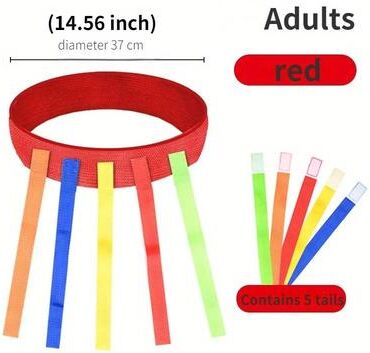
Uplift Essentials Kindergarten Catching Tail Training Belt Active Outdoor Teamwork Game For Kids adults redEncourage active play and social development with the Kindergarten Catching Tail Training Belt, the ultimate outdoor funny game toy belt for highenergy fun. This vibrant training equipment is designed to get children moving, helping them develop...35,97 $*Shipping: 0,00 $Secure redirect to the provider
-
Has Lui also made serious films or only comedies?
Yes, Lui has also made serious films in addition to comedies. While he is known for his comedic roles and performances, he has also taken on more dramatic and serious roles in films. Lui has showcased his versatility as an actor by taking on a range of characters in both comedic and serious films, demonstrating his ability to excel in various genres. **
-
'I don't understand the use of lui and leur?'
In French, "lui" and "leur" are both used as indirect object pronouns to replace nouns that are the recipients of the action. "Lui" is used to refer to a singular masculine or feminine noun, while "leur" is used to refer to a plural noun. For example, "Je lui ai donné le livre" means "I gave him/her the book," and "Je leur ai donné les livres" means "I gave them the books." It's important to remember that these pronouns must agree in gender and number with the noun they are replacing. **
-
How do you use the object pronouns lui and leur?
The object pronoun "lui" is used to replace indirect objects referring to a singular person, while "leur" is used to replace indirect objects referring to plural people. For example, "Je lui parle" means "I am talking to him/her" and "Je leur donne des cadeaux" means "I am giving gifts to them." These pronouns come before the verb in a sentence and help avoid repetition of the indirect object. **
-
What does "avec elle" or "avec lui" mean in French?
"Avec elle" means "with her" and "avec lui" means "with him" in French. These phrases are used to indicate that someone is in the company of a specific person, either a female or male. **
* All prices are inclusive of VAT and, if applicable, plus shipping costs. The offer information is based on the details provided by the respective shop and is updated through automated processes. Real-time updates do not occur, so deviations can occur in individual cases. ** Note: Parts of this content were created by AI.