Buy mlm1.eu ?
We are moving the project
mlm1.eu .
Are you interested in purchasing the domain
mlm1.eu ?
domain@kv-gmbh.de · 0541-91531010
Buy mlm1.eu ?
Is a function discontinuous if it is discontinuous at a point?
Yes, a function is considered discontinuous if it is discontinuous at a point. A function is said to be discontinuous at a point if it does not exist at that point, or if the limit of the function as it approaches that point does not exist, or if the function has a jump, infinite, or removable discontinuity at that point. Therefore, if a function exhibits any of these characteristics at a specific point, it is considered to be discontinuous at that point. **
What is discontinuous shift work?
Discontinuous shift work refers to a work schedule in which employees work irregular or non-consecutive shifts, often with varying start and end times. This type of schedule can include split shifts, on-call shifts, or rotating shifts that change frequently. Discontinuous shift work can be challenging for employees to adjust to, as it can disrupt their sleep patterns and make it difficult to maintain a consistent work-life balance. Additionally, it may also lead to increased fatigue and stress for workers. **
Similar search terms for Discontinuous
Top-Angebote
Products related to Discontinuous:


-
What are examples of discontinuous texts?
Discontinuous texts are those that are not presented in a linear or continuous manner. Examples of discontinuous texts include poetry, where the lines and stanzas are often broken up in non-sequential order, and hypertext, which allows readers to navigate non-linearly through interconnected pieces of text. Other examples include graphic novels, where the narrative is conveyed through a combination of images and text, and choose-your-own-adventure books, where the reader can jump between different story paths. These texts challenge traditional notions of linear reading and offer alternative ways of engaging with written content. **
-
Why is one strand discontinuous during DNA replication?
One strand is discontinuous during DNA replication because DNA polymerase can only synthesize DNA in the 5' to 3' direction. This means that the leading strand, which is synthesized continuously in the same direction as the replication fork movement, can be synthesized continuously. However, the lagging strand, which is synthesized in the opposite direction of the replication fork movement, must be synthesized in short, discontinuous fragments called Okazaki fragments. These fragments are later joined together by DNA ligase to form a continuous strand. **
-
What is the difference between continuous and discontinuous?
Continuous refers to something that occurs without interruption or gaps, while discontinuous refers to something that is broken or interrupted. In a continuous process, there is a smooth and uninterrupted flow, whereas in a discontinuous process, there are breaks or gaps in the sequence. Continuous changes are gradual and ongoing, while discontinuous changes are abrupt and involve distinct shifts or interruptions. **
-
Why does DNA replication occur on the discontinuous strand?
DNA replication occurs on the discontinuous strand, also known as the lagging strand, because the DNA polymerase enzyme can only add nucleotides in the 5' to 3' direction. This means that the lagging strand, which is oriented in the opposite direction of the replication fork, must be synthesized in short, discontinuous fragments called Okazaki fragments. These fragments are later joined together by DNA ligase to form a continuous strand. This process allows for efficient and accurate replication of the entire DNA molecule. **

What is the difference between continuous and discontinuous DNA replication?
Continuous DNA replication occurs on the leading strand of the DNA template, where the DNA polymerase synthesizes a new strand continuously in the 5' to 3' direction. In contrast, discontinuous DNA replication occurs on the lagging strand, where the DNA polymerase synthesizes short fragments called Okazaki fragments in the 5' to 3' direction away from the replication fork. These fragments are later joined together by DNA ligase to form a continuous strand. **
What is the difference between continuous synthesis and discontinuous synthesis?
Continuous synthesis is a process where the production of a substance occurs without interruption, with the raw materials continuously fed into the system and the product continuously removed. This method is often used in industries where a constant supply of the product is required. On the other hand, discontinuous synthesis involves a batch process where the raw materials are added, the reaction occurs, and then the product is removed before the next batch begins. This method is often used for smaller-scale production or when the reaction conditions need to be closely controlled for each batch. **
Top-Angebote
Products related to Discontinuous:
-
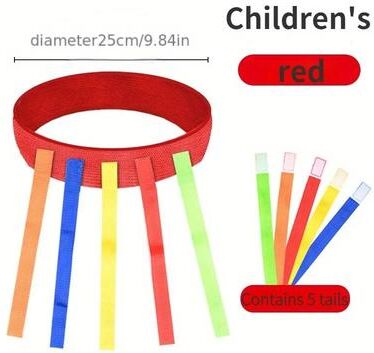
Uplift Essentials Kindergarten Catching Tail Training Belt Active Outdoor Teamwork Game For Kids children redEncourage active play and social development with the Kindergarten Catching Tail Training Belt, the ultimate outdoor funny game toy belt for highenergy fun. This vibrant training equipment is designed to get children moving, helping them develop...34,97 $*Shipping: 0,00 $Secure redirect to the provider
-
Is a function discontinuous if it is discontinuous at a point?
Yes, a function is considered discontinuous if it is discontinuous at a point. A function is said to be discontinuous at a point if it does not exist at that point, or if the limit of the function as it approaches that point does not exist, or if the function has a jump, infinite, or removable discontinuity at that point. Therefore, if a function exhibits any of these characteristics at a specific point, it is considered to be discontinuous at that point. **
-
What is discontinuous shift work?
Discontinuous shift work refers to a work schedule in which employees work irregular or non-consecutive shifts, often with varying start and end times. This type of schedule can include split shifts, on-call shifts, or rotating shifts that change frequently. Discontinuous shift work can be challenging for employees to adjust to, as it can disrupt their sleep patterns and make it difficult to maintain a consistent work-life balance. Additionally, it may also lead to increased fatigue and stress for workers. **
-
What are examples of discontinuous texts?
Discontinuous texts are those that are not presented in a linear or continuous manner. Examples of discontinuous texts include poetry, where the lines and stanzas are often broken up in non-sequential order, and hypertext, which allows readers to navigate non-linearly through interconnected pieces of text. Other examples include graphic novels, where the narrative is conveyed through a combination of images and text, and choose-your-own-adventure books, where the reader can jump between different story paths. These texts challenge traditional notions of linear reading and offer alternative ways of engaging with written content. **
-
Why is one strand discontinuous during DNA replication?
One strand is discontinuous during DNA replication because DNA polymerase can only synthesize DNA in the 5' to 3' direction. This means that the leading strand, which is synthesized continuously in the same direction as the replication fork movement, can be synthesized continuously. However, the lagging strand, which is synthesized in the opposite direction of the replication fork movement, must be synthesized in short, discontinuous fragments called Okazaki fragments. These fragments are later joined together by DNA ligase to form a continuous strand. **
Similar search terms for Discontinuous
-
John Murray Opportunity: Seize the Day, Win at Life by Rob Moore – Success & Mindset GuideAre you waiting for that once-in-a-lifetime opportunity to change your life, change your business or change the world? How will you know when it comes? How will you be sure you're ready? This book is not about waiting for an opportunity that might never come. It's a book for right now containing mployed right away, and will ensure that you attract opportunities, whether big or small, all the time. Successful people are sometimes lucky - but most of all they find success because they have trained their minds to identify great opportunities and make the most of them when they arrive, rather than freezing with uncertainty or lacking the vision to see them through. In this book Rob Moore, the bestselling author of MONEY, START NOW. GET PERFECT LATER and I'M WORTH MORE shows you how to elevate your emotional intelligence and decision making to ensure that when opportunity strikes you are ready to take advantage, seize the day, and win at life. When Opportunity knocks, you'll be ready.4,99 £*Shipping: 1,99 £Secure redirect to the provider
-
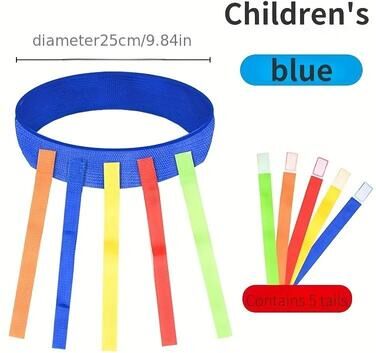
Uplift Essentials Kindergarten Catching Tail Training Belt Active Outdoor Teamwork Game For Kids children blueEncourage active play and social development with the Kindergarten Catching Tail Training Belt, the ultimate outdoor funny game toy belt for highenergy fun. This vibrant training equipment is designed to get children moving, helping them develop...34,97 $*Shipping: 0,00 $Secure redirect to the provider
-
What is the difference between continuous and discontinuous?
Continuous refers to something that occurs without interruption or gaps, while discontinuous refers to something that is broken or interrupted. In a continuous process, there is a smooth and uninterrupted flow, whereas in a discontinuous process, there are breaks or gaps in the sequence. Continuous changes are gradual and ongoing, while discontinuous changes are abrupt and involve distinct shifts or interruptions. **
-
Why does DNA replication occur on the discontinuous strand?
DNA replication occurs on the discontinuous strand, also known as the lagging strand, because the DNA polymerase enzyme can only add nucleotides in the 5' to 3' direction. This means that the lagging strand, which is oriented in the opposite direction of the replication fork, must be synthesized in short, discontinuous fragments called Okazaki fragments. These fragments are later joined together by DNA ligase to form a continuous strand. This process allows for efficient and accurate replication of the entire DNA molecule. **
-
What is the difference between continuous and discontinuous DNA replication?
Continuous DNA replication occurs on the leading strand of the DNA template, where the DNA polymerase synthesizes a new strand continuously in the 5' to 3' direction. In contrast, discontinuous DNA replication occurs on the lagging strand, where the DNA polymerase synthesizes short fragments called Okazaki fragments in the 5' to 3' direction away from the replication fork. These fragments are later joined together by DNA ligase to form a continuous strand. **
-
What is the difference between continuous synthesis and discontinuous synthesis?
Continuous synthesis is a process where the production of a substance occurs without interruption, with the raw materials continuously fed into the system and the product continuously removed. This method is often used in industries where a constant supply of the product is required. On the other hand, discontinuous synthesis involves a batch process where the raw materials are added, the reaction occurs, and then the product is removed before the next batch begins. This method is often used for smaller-scale production or when the reaction conditions need to be closely controlled for each batch. **
* All prices are inclusive of VAT and, if applicable, plus shipping costs. The offer information is based on the details provided by the respective shop and is updated through automated processes. Real-time updates do not occur, so deviations can occur in individual cases. ** Note: Parts of this content were created by AI.