Buy mlm1.eu ?
We are moving the project
mlm1.eu .
Are you interested in purchasing the domain
mlm1.eu ?
domain@kv-gmbh.de · 0541-91531010
Buy mlm1.eu ?
What are windward deserts and coastal deserts?
Windward deserts are located on the side of a mountain range that faces the prevailing wind direction. As the air rises over the mountains, it cools and releases moisture, creating a rain shadow effect on the leeward side of the mountains, resulting in dry and arid conditions. Coastal deserts, on the other hand, are located along the coastlines and are influenced by the cool ocean currents. These deserts often experience low precipitation and high evaporation rates due to the proximity to the ocean, resulting in dry and desert-like conditions. Both windward deserts and coastal deserts are characterized by their arid climates and limited vegetation. **
What are rain shadow deserts and coastal deserts?
Rain shadow deserts are dry regions that form on the leeward side of mountain ranges, where the air has lost most of its moisture as it rises over the mountains. This results in a rain shadow effect, creating arid conditions on the opposite side of the mountains. Coastal deserts, on the other hand, are dry regions that are located near coastal areas and are influenced by cold ocean currents that inhibit the formation of clouds and precipitation. These deserts often experience mild temperatures due to the moderating effect of the nearby ocean. **

Similar search terms for Deserts
Top-Angebote
Products related to Deserts:
-
Fox Eye Publishing Children’s Introduction to Geography 10 Book Set – Coral Reefs, Deserts, Rainforests & More Hardback CollectionChildren Introduction To Geography For Beginners – 10 Hardback Book Collection Set The Introduction to Geography Series is a captivating 10-book hardback collection that explores the Earth’s most diverse landscapes and ecosystems. Each volume introduces a unique geographical feature, offering fascinating insights into its location, characteristics, and importance to our planet. This set includes: Introduction to Coral Reefs: What are coral reefs and where are they found? Discover the vibrant underwater world of coral reefs inside. Introduction to Deserts: What are deserts and where are they found? Learn all about the wonders of the desert inside. Introduction to Forests: What are forests and where are they found? Explore the amazing world of forests inside. Introduction to Grasslands: What are grasslands and where are they found? Find out about the life and landscapes of grasslands inside. Introduction to Islands: What are islands and where are they found? Discover their unique features and wildlife inside. Introduction to Mountains: What are mountains and where are they found? Learn about these towering landscapes inside. Introduction to Oceans and Seas: What are oceans and seas and where are they found? Dive into the vast waters of our planet inside. Introduction to Polar Places: What are polar places and where are they found? Explore the icy extremes of the Earth inside. Introduction to Rainforests: What are rainforests and where are they found? Discover their extraordinary plants and animals inside. Introduction to Rivers and Lakes: What are rivers and lakes and where are they found? Learn about these vital waterways inside. Each book in this series provides an engaging introduction to geography and ecology, offering readers a deeper appreciation of the natural landscapes that shape our world.9,99 £*Shipping: 2,99 £Secure redirect to the provider
-
Uplift Essentials Kindergarten Catching Tail Training Belt Active Outdoor Teamwork Game For Kids children blueEncourage active play and social development with the Kindergarten Catching Tail Training Belt, the ultimate outdoor funny game toy belt for highenergy fun. This vibrant training equipment is designed to get children moving, helping them develop...34,97 $*Shipping: 0,00 $Secure redirect to the provider




-
How do subtropical deserts and coastal deserts form?
Subtropical deserts form due to the combination of high pressure systems and the Earth's rotation, which creates dry, descending air that inhibits cloud formation and precipitation. These deserts are typically located around 30 degrees latitude north and south of the equator. Coastal deserts form in areas where cold ocean currents create stable atmospheric conditions, leading to minimal rainfall and arid conditions along the coast. These deserts are often found on the western coasts of continents, such as the Atacama Desert in South America and the Namib Desert in Africa. **
-
Is there a differentiation between rain shadow deserts and interior deserts in continental deserts?
Yes, there is a differentiation between rain shadow deserts and interior deserts in continental deserts. Rain shadow deserts are formed on the leeward side of mountain ranges where the air is dry after losing moisture on the windward side, resulting in arid conditions. Interior deserts, on the other hand, are located far from any significant water source, such as oceans or large lakes, and experience dry conditions due to their distance from sources of moisture. Both types of deserts have different mechanisms for their arid conditions, but they share the characteristic of low precipitation levels. **
-
Are there distinctions made between rain shadow deserts and interior deserts in continental deserts?
Yes, there are distinctions made between rain shadow deserts and interior deserts in continental deserts. Rain shadow deserts are formed on the leeward side of mountain ranges where the air is dry after losing moisture on the windward side, resulting in arid conditions. Interior deserts, on the other hand, are located far from any significant water source and experience extreme temperature variations. While both types of deserts are arid, their formation and characteristics differ due to their geographical locations and climatic conditions. **
-
Why are rain shadow deserts called rain shadow deserts?
Rain shadow deserts are called so because they are formed as a result of a rain shadow effect. This occurs when moist air from the ocean is forced to rise over a mountain range, causing it to cool and release its moisture as rain or snow on the windward side of the mountains. As the air descends on the leeward side, it warms and becomes drier, creating a rain shadow effect. This results in a dry and arid climate on the leeward side of the mountains, leading to the formation of rain shadow deserts. **


How do deserts form?
Deserts form due to a combination of factors such as low precipitation, high evaporation rates, and geographical features like mountain ranges blocking moisture. When an area receives very little rainfall, vegetation struggles to grow, leading to barren landscapes. The lack of vegetation also contributes to high temperatures and low humidity, creating harsh conditions for life to thrive. Over time, these conditions persist, resulting in the formation of a desert ecosystem. **
Are deserts contaminated now?
Deserts can be contaminated by various human activities such as mining, industrial pollution, and improper waste disposal. Additionally, climate change can also contribute to desert contamination by altering natural ecosystems and increasing the spread of pollutants. While not all deserts are contaminated, human activities and environmental changes can have a significant impact on the contamination levels in certain desert regions. It is important to monitor and address these issues to prevent further contamination and protect desert ecosystems. **
Top-Angebote
Products related to Deserts:
-
Search Press David Arabian Light : An Artist's Journey Through Deserts, Mountains and SouksExplore the deserts, mountains and souks of the Middle East, with best-selling author and artist David Bellamy. Following on from David's highly acclaimed Arctic Light, this book provides an intriguing and often entertaining insight into South Arabia and the Swahili Coast, Jordan, Lebanon and Oman. It describes the history, culture, customs and geography of the region and the daily life of its inhabitants, as viewed through the eyes of a world-renowned watercolour artist and life-long adventurer.Filled with personal anecdotes and humour, David Bellamy's unique account shines a light on the Middle East and highlights the incredible beauty and fascinating culture of this much-neglected region. David's stunning artwork, that he painted during his various expeditions, features throughout the book and captures perfectly the diverse and majestic nature of the region. Watercolourists will be inspired by the author's awe-inspiring ability to depict sweeping vistas and create a sense of space in his paintings, and to capture the very essence of a place through his art.18,75 £*Shipping: 2,99 £Secure redirect to the provider
-
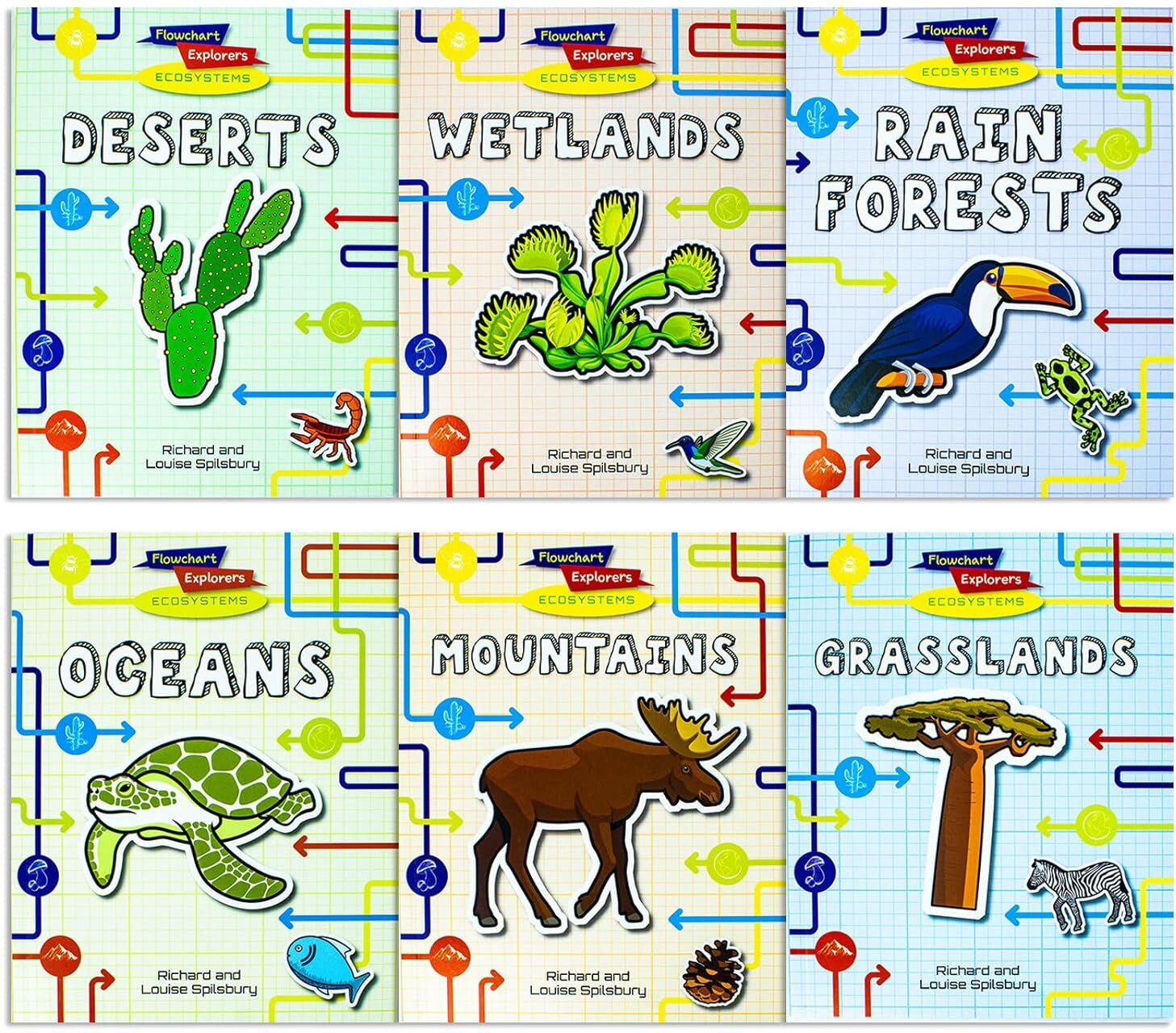
Fox Eye Publishing Flowchart Explorers Ecosystems 6 Book Set – Deserts, Oceans, Rainforests & STEM Geography CollectionUnderstanding ecosystems can be tricky, but flowcharts make it easy. Find out inside what ecosystems are, what plants and animals create them, and why it is so important to protect them. Discover how ecosystem science is at work everywhere on our planet!9,89 £*Shipping: 2,99 £Secure redirect to the provider
-
Fox Eye Publishing Children’s Introduction to Geography 10 Book Set – Coral Reefs, Deserts, Rainforests & More Hardback CollectionChildren Introduction To Geography For Beginners – 10 Hardback Book Collection Set The Introduction to Geography Series is a captivating 10-book hardback collection that explores the Earth’s most diverse landscapes and ecosystems. Each volume introduces a unique geographical feature, offering fascinating insights into its location, characteristics, and importance to our planet. This set includes: Introduction to Coral Reefs: What are coral reefs and where are they found? Discover the vibrant underwater world of coral reefs inside. Introduction to Deserts: What are deserts and where are they found? Learn all about the wonders of the desert inside. Introduction to Forests: What are forests and where are they found? Explore the amazing world of forests inside. Introduction to Grasslands: What are grasslands and where are they found? Find out about the life and landscapes of grasslands inside. Introduction to Islands: What are islands and where are they found? Discover their unique features and wildlife inside. Introduction to Mountains: What are mountains and where are they found? Learn about these towering landscapes inside. Introduction to Oceans and Seas: What are oceans and seas and where are they found? Dive into the vast waters of our planet inside. Introduction to Polar Places: What are polar places and where are they found? Explore the icy extremes of the Earth inside. Introduction to Rainforests: What are rainforests and where are they found? Discover their extraordinary plants and animals inside. Introduction to Rivers and Lakes: What are rivers and lakes and where are they found? Learn about these vital waterways inside. Each book in this series provides an engaging introduction to geography and ecology, offering readers a deeper appreciation of the natural landscapes that shape our world.9,99 £*Shipping: 2,99 £Secure redirect to the provider
-
Uplift Essentials Kindergarten Catching Tail Training Belt Active Outdoor Teamwork Game For Kids children blueEncourage active play and social development with the Kindergarten Catching Tail Training Belt, the ultimate outdoor funny game toy belt for highenergy fun. This vibrant training equipment is designed to get children moving, helping them develop...34,97 $*Shipping: 0,00 $Secure redirect to the provider
-
What are windward deserts and coastal deserts?
Windward deserts are located on the side of a mountain range that faces the prevailing wind direction. As the air rises over the mountains, it cools and releases moisture, creating a rain shadow effect on the leeward side of the mountains, resulting in dry and arid conditions. Coastal deserts, on the other hand, are located along the coastlines and are influenced by the cool ocean currents. These deserts often experience low precipitation and high evaporation rates due to the proximity to the ocean, resulting in dry and desert-like conditions. Both windward deserts and coastal deserts are characterized by their arid climates and limited vegetation. **
-
What are rain shadow deserts and coastal deserts?
Rain shadow deserts are dry regions that form on the leeward side of mountain ranges, where the air has lost most of its moisture as it rises over the mountains. This results in a rain shadow effect, creating arid conditions on the opposite side of the mountains. Coastal deserts, on the other hand, are dry regions that are located near coastal areas and are influenced by cold ocean currents that inhibit the formation of clouds and precipitation. These deserts often experience mild temperatures due to the moderating effect of the nearby ocean. **
-
How do subtropical deserts and coastal deserts form?
Subtropical deserts form due to the combination of high pressure systems and the Earth's rotation, which creates dry, descending air that inhibits cloud formation and precipitation. These deserts are typically located around 30 degrees latitude north and south of the equator. Coastal deserts form in areas where cold ocean currents create stable atmospheric conditions, leading to minimal rainfall and arid conditions along the coast. These deserts are often found on the western coasts of continents, such as the Atacama Desert in South America and the Namib Desert in Africa. **
-
Is there a differentiation between rain shadow deserts and interior deserts in continental deserts?
Yes, there is a differentiation between rain shadow deserts and interior deserts in continental deserts. Rain shadow deserts are formed on the leeward side of mountain ranges where the air is dry after losing moisture on the windward side, resulting in arid conditions. Interior deserts, on the other hand, are located far from any significant water source, such as oceans or large lakes, and experience dry conditions due to their distance from sources of moisture. Both types of deserts have different mechanisms for their arid conditions, but they share the characteristic of low precipitation levels. **
Similar search terms for Deserts
-
Uplift Essentials Kindergarten Catching Tail Training Belt Active Outdoor Teamwork Game For Kids adults redEncourage active play and social development with the Kindergarten Catching Tail Training Belt, the ultimate outdoor funny game toy belt for highenergy fun. This vibrant training equipment is designed to get children moving, helping them develop...35,97 $*Shipping: 0,00 $Secure redirect to the provider
-
Are there distinctions made between rain shadow deserts and interior deserts in continental deserts?
Yes, there are distinctions made between rain shadow deserts and interior deserts in continental deserts. Rain shadow deserts are formed on the leeward side of mountain ranges where the air is dry after losing moisture on the windward side, resulting in arid conditions. Interior deserts, on the other hand, are located far from any significant water source and experience extreme temperature variations. While both types of deserts are arid, their formation and characteristics differ due to their geographical locations and climatic conditions. **
-
Why are rain shadow deserts called rain shadow deserts?
Rain shadow deserts are called so because they are formed as a result of a rain shadow effect. This occurs when moist air from the ocean is forced to rise over a mountain range, causing it to cool and release its moisture as rain or snow on the windward side of the mountains. As the air descends on the leeward side, it warms and becomes drier, creating a rain shadow effect. This results in a dry and arid climate on the leeward side of the mountains, leading to the formation of rain shadow deserts. **
-
How do deserts form?
Deserts form due to a combination of factors such as low precipitation, high evaporation rates, and geographical features like mountain ranges blocking moisture. When an area receives very little rainfall, vegetation struggles to grow, leading to barren landscapes. The lack of vegetation also contributes to high temperatures and low humidity, creating harsh conditions for life to thrive. Over time, these conditions persist, resulting in the formation of a desert ecosystem. **
-
Are deserts contaminated now?
Deserts can be contaminated by various human activities such as mining, industrial pollution, and improper waste disposal. Additionally, climate change can also contribute to desert contamination by altering natural ecosystems and increasing the spread of pollutants. While not all deserts are contaminated, human activities and environmental changes can have a significant impact on the contamination levels in certain desert regions. It is important to monitor and address these issues to prevent further contamination and protect desert ecosystems. **
* All prices are inclusive of VAT and, if applicable, plus shipping costs. The offer information is based on the details provided by the respective shop and is updated through automated processes. Real-time updates do not occur, so deviations can occur in individual cases. ** Note: Parts of this content were created by AI.